Welcome to Better Tractors Home of the
Better 175 Bidirectional
Productivity-First Tractor
A European-engineered bidirectional tractor designed to increase output per operator, reduce fleet size, and create scalable operations without scaling labor.
Manufactured by BM Tractors of Italy – Canadian Distribution by Better Canada of Quebec
Ontario Sales & Support by Partners Solutions of Orillia
Full Bidirectional Design
Reversible Operater Station

Four Wheel Steering

Rugged Terrain Control
Powerful Eco-friendly Engine
Looking to Grow Your Business?
Two Ways Operations Scale
Most operations grow by adding more machines and more operators – increasing fleet size and labour.
The Better 175 was engineered to maximize operator output – enabling compression of fleet size and labour.
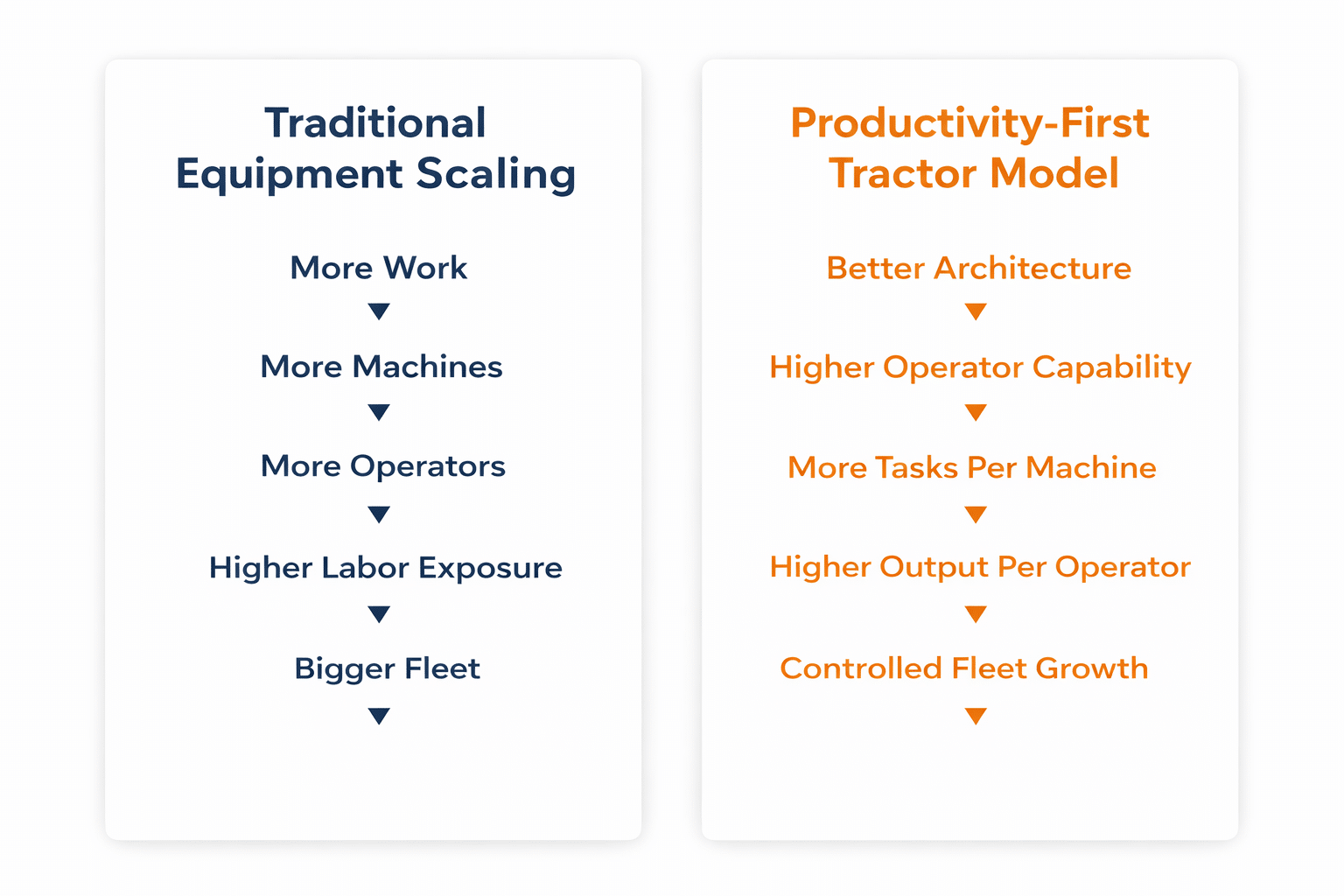
The Better 175 was engineered to increase output per operator rather than expand fleet size.
Engineering Insight
The engineering principles behind a productivity-first tractor designed to do more with every operator.
Most capital equipment is evaluated by specification.
Horsepower.
Hydraulic flow.
Lift capacity.
But specification alone does not define capability.
Capability is defined by architecture.
Platform orientation.
Operator position.
Steering configuration.
Power delivery.
When these elements are aligned, the machine becomes structurally adaptable.
The Better 175 is not a conventional tractor.
It was engineered to increase output per operator, reduce fleet dependency, and allow operations to scale without scaling labor.
Elena Bianchi
Product Architecture Specialist
Better Tractors
Architecture Determines Capability
True bidirectional design, a reversible operator station, and four-wheel four-mode steering differentiate the Better 175 from most tractors on the market. Together, these features deliver higher operator output across a wide range of year-round applications while helping to reduce fleet size and labor requirements. Explore these features below, or watch the Nobody Does It Better video to see how they work together in real-world operations.
True Bidirectional Design
True Bidirectional Design
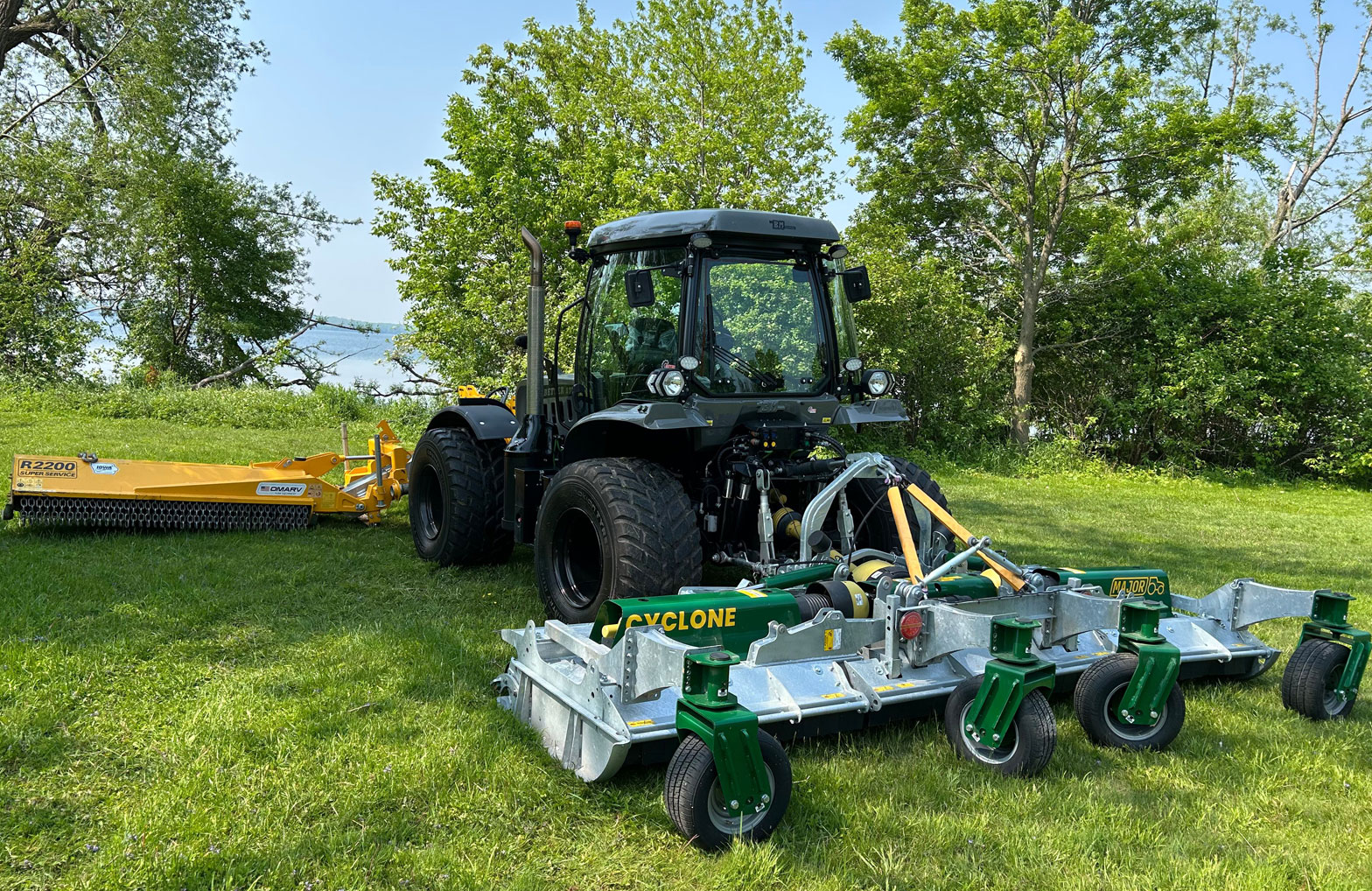
True bidirectional design for front and rear implement operation, the Better 175 allows seamless transition between forward and reverse tasks, enhancing versatility and reducing downtime.
Reversible Operator Station
Reversible Operator Station
The reversible operator station rotates 180° with a single lever, allowing full visibility and control whether facing forward or backward—ideal for mowing, snow blowing, or silage handling.
4 Wheel 4 Mode Steering
4 Wheel 4 Mode Steering
4 Wheel 4 Mode Steering offers front, rear, crab, and quad steering modes for unmatched maneuverability in tight spaces, slopes, or urban environments.
Built for Demanding Operations
Designed around productivity-first architecture, the Better 175 adapts to a wide range of demanding operations. From winter maintenance and municipal work to agriculture and forestry, one machine can switch out or double up on implements and attachments to maximize operator efficiency and output thus controlling fleet size and labour.

Is the Better 175 Productivity-First Tractor the Right Fit for Your Operation?
- Do your operators frequently work with rear-mounted implements or attachments?
- Do your tractor tasks routinely involve tight or complex environments, sloped embankments, challenging landscapes or rough terrain?
- Do your operators currently use multiple machines to perform a variety of tasks or have to switch out implements or attachments on a regular basis?
- Do your operators perform tractor tasks that could potentially be performed more efficiently with dual or complimentary implements or attachments?
- Do you believe improved travel time and faster operator execution of tasks would benefit your bottom line?
If you answered yes to one or more of these questions, it may be worth exploring how a productivity-first tractor could improve efficiency in your operation. Schedule an operational discussion to review your applications and see where the Better 175 could increase output while helping reduce equipment and labor requirements.