
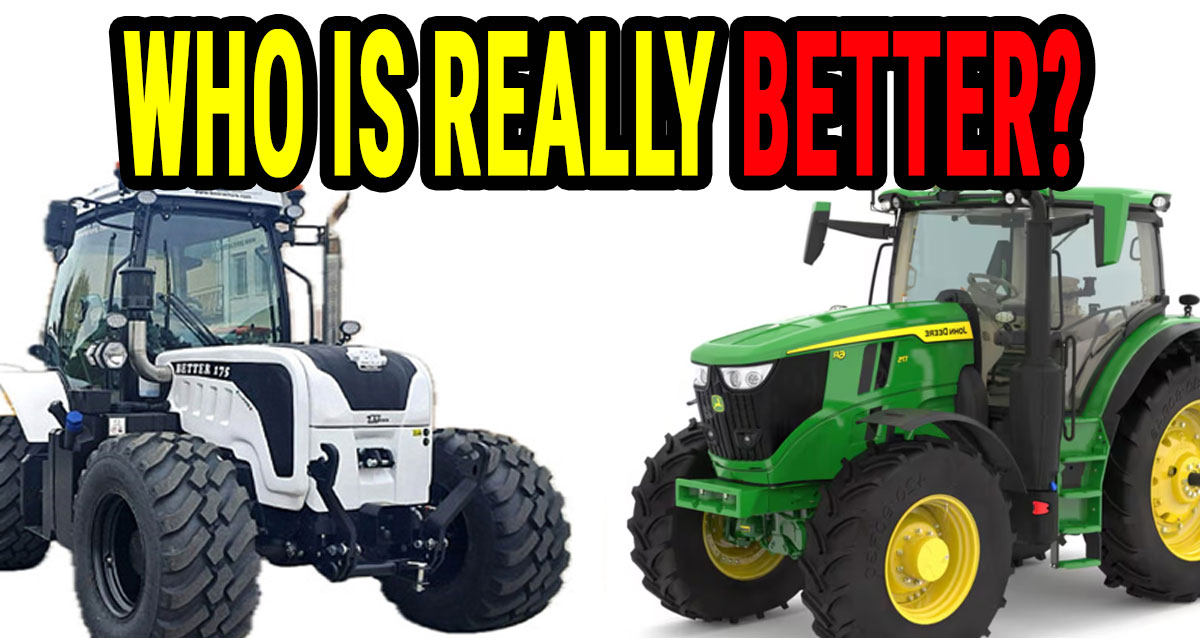
Not all tractors in the 150–180 HP range are designed to solve the same problem.
While machines in this category may appear comparable on paper — similar horsepower, hydraulic capacity, and transmission options — their real-world performance is defined by how they are engineered to be used.
The key difference is not specification.
It is architecture.
Two Different Approaches to the Same Category
Conventional tractors such as the John Deere 6175M, Kubota M7-172, Fendt 500 Vario, New Holland T6.180, and Case IH Maxxum series are primarily designed for agricultural field work, loader applications, and PTO-driven tasks.
They are optimized for:
- Pulling implements across open fields
- Loader work in controlled environments
- Precision farming applications
In these environments, they perform well.
However, when operations require frequent direction changes, tight maneuverability, or continuous implement visibility, these machines begin to show limitations.
A Different Design Philosophy
The Better 175 is a European-engineered, productivity-first tractor designed for a different type of work.
Its purpose is to increase output per operator, compress fleet size, and support scalable operations without increasing labor.
This is achieved through a fundamentally different machine architecture.
- True bidirectional design with a reversible operator station
- Four steering modes and rear axle swivel for maneuverability
- Hydrostatic transmission for precise control in variable conditions
These are not feature differences — they define how the machine is used.
Where the Difference Becomes Clear
In real-world operations such as snow removal, embankment mowing, roadside maintenance, and urban work environments, the limitations of conventional tractors become more apparent.
Operators often need to:
- Work in reverse to see the implement
- Reposition frequently in tight or complex spaces
- Operate without direct visibility of the working area
The Better 175 is designed specifically to eliminate these constraints.
By allowing the operator to face the implement directly and maintain full control in both directions, the machine improves precision, reduces fatigue, and increases overall efficiency.
Application-Based Comparison
The distinction between these machines is best understood through application:
- Conventional tractors: Field work, large open areas, standard loader operations
- Better 175: Snow removal, vegetation management, embankments, urban and confined environments
Each is optimized for a different type of work.
Comparing them directly by specification alone overlooks how productivity is actually achieved in real operating conditions.
From Specification to Productivity
Traditional evaluations focus on horsepower, hydraulics, and transmission type.
While these are important, they do not fully define how efficiently work is performed.
The Better 175 is designed around a different principle:
When machine architecture improves operator capability, productivity increases.
This results in:
- More work completed per operator
- Reduced need for multiple machines
- Improved efficiency in complex environments
Final Perspective
The Better 175 is not a direct replacement for conventional tractors — and conventional tractors are not designed to replace it.
They serve different operational purposes.
The Better 175 is engineered for environments where visibility, maneuverability, and operator efficiency define performance.
Understanding this distinction is what allows operators and organizations to select the right machine for the work — not just the right specification on paper.
