
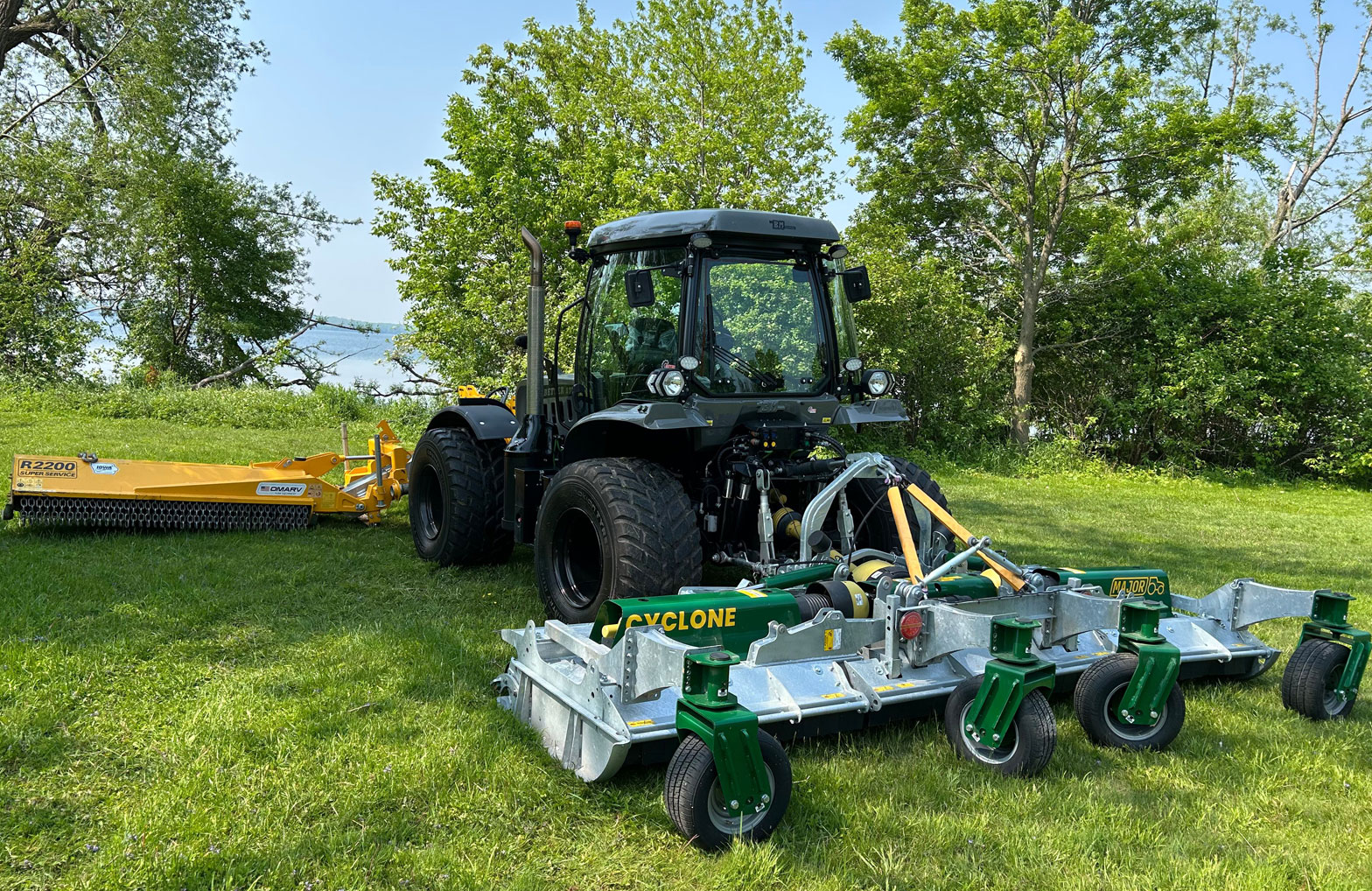
Tractors are the backbone of modern agriculture, landscaping, and municipal operations—but they’re only as versatile as the tools they carry. Whether you're managing a farm, clearing snow, or maintaining public infrastructure, understanding the difference between tractor implements and attachments is essential for choosing the right equipment for the job.
What Are Tractor Implements?
Implements are tools designed to perform specific tasks. They typically connect to the tractor via the three-point hitch or drawbar and are powered either mechanically (via PTO), hydraulically, or by ground contact. Implements fundamentally change the function of the tractor, turning it into a mower, tiller, plow, or seeder depending on the tool in use.
Examples of common implements include:
- Rotary tillers
- Plows
- Cultivators
- Seeders
- Snow blowers
These tools are often used seasonally and are selected based on the specific task at hand. Implements are typically larger and more task-specific than attachments.
Learn more about implements from MechanicWiz’s breakdown of tractor tools.
What Are Tractor Attachments?
Attachments are supplementary devices that enhance the tractor’s capabilities without necessarily changing its core function. They often mount to the front, rear, or mid-section of the tractor and may include hydraulic or electric components. Attachments are generally more modular and can be swapped quickly depending on the job.
Examples of common attachments include:
- Front-end loaders
- Pallet forks
- Bale spears
- Cab upgrades (e.g., stereos, lighting)
- Snow plow blades
Attachments are ideal for multi-purpose use and are often used in combination with implements to increase efficiency. For example, a loader attachment might be used to transport materials while a rear-mounted implement tills the soil.
For a deeper dive into attachment types, check out Attachments King’s FAQ on tractor attachments vs implements.
Key Differences at a Glance
| Feature | Implements | Attachments |
|---|---|---|
| Primary Function | Transforms tractor for specific tasks | Enhances or adds capabilities |
| Mounting Location | Rear (3-point hitch), front, or mid | Front, rear, mid, or cab |
| Power Source | PTO, hydraulics, or ground contact | Hydraulics, electric, or manual |
| Examples | Tiller, plow, mower, snow blower | Loader, fork, blade, cab light |
| Use Case | Task-specific operations | General-purpose enhancements |
Why It Matters
Understanding the difference between implements and attachments helps you:
- Choose the right tool for the job
- Optimize your tractor’s performance
- Avoid compatibility issues
- Plan your equipment budget more effectively
Whether you're outfitting a municipal fleet or upgrading your farm equipment, knowing what each tool does—and how it connects—can save time, money, and frustration.
Final Thoughts
Tractor implements and attachments both expand the capabilities of your machine, but they serve different roles. Implements transform your tractor into a task-specific tool, while attachments enhance its versatility. Understanding these differences ensures you get the most out of your investment and keep your operations running smoothly.
For more insights and examples, visit New South Tractor’s guide to attachments and implements.
